

Honda Sensing Explained: What Helps Most in Miami Traffic
A clear, model-by-model look at which Honda Sensing features actually help most in Miami traffic.
Honda Sensing helps most in Miami traffic through three features working together: Adaptive Cruise Control for expressway merges and stop-and-go stretches, Collision Mitigation Braking System for sudden slowdowns in gridlock, and Lane Keeping Assist paired with Road Departure Mitigation for staying centered during rainy-season lane changes. Honda of South Miami walks shoppers through this suite every week, and the most common misconception we clear up is assuming every Honda Sensing feature is identical across every model and trim. Some features, like the core braking and lane systems, come standard on every 2026 Honda we stock, while others, like Blind Spot Information, vary by model and sometimes by trim level. For a Coral Gables shopper comparing a Civic against a CR-V, that distinction actually changes which vehicle fits best.
From here forward, we’ll walk you through this the same way we walk our own customers through it on the lot. Miami driving creates a specific set of conditions, from Palmetto Expressway merges to sudden downpours on US-1, and understanding which Honda Sensing feature addresses which situation makes the difference between choosing a trim that actually fits your commute and guessing based on a spec sheet.
In this guide, we cover what Honda Sensing includes, how Adaptive Cruise Control and Collision Mitigation Braking System perform in real Miami traffic, which features vary by model or trim, which local scenarios matter most, and which features we’d recommend testing first when you visit us.
Definition: Honda Sensing is a suite of camera-and-radar-based driver-assistive technologies that monitor the road ahead, detect lane markings, and help a driver avoid or reduce the severity of a collision. It is designed to support, not replace, an attentive driver during everyday driving situations. For drivers in Miami, Coral Gables, South Miami, and Kendall, it provides added support during expressway merging, stop-and-go traffic, and sudden weather changes.
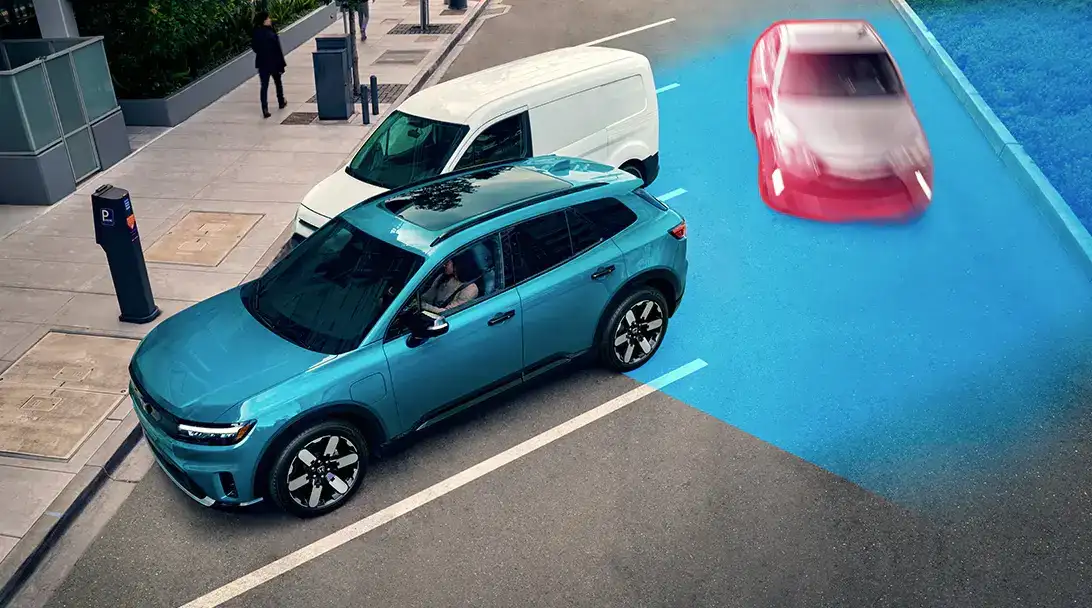
Table of Contents
What Honda Sensing Includes
Key Takeaway: The core Honda Sensing suite, including automatic braking and lane-centering assist, comes standard on every 2026 Honda we stock, so you don’t need to upgrade trims to get the essential safety layer.
The Core Honda Sensing Suite, Standard Across the Lineup
Honda Sensing uses a front-mounted camera and radar sensor system to monitor the road ahead, read lane markings, and detect vehicles and hazards in your path. We carry this core suite as standard equipment across every 2026 model we stock, from the Civic through the Odyssey and Pilot, which means the features below aren’t reserved for a premium trim.
- Collision Mitigation Braking System, which can apply the brakes automatically if a frontal collision looks imminent and the driver hasn’t reacted
- Road Departure Mitigation System, which provides steering assistance and alerts if the vehicle drifts toward leaving the roadway
- Lane Keeping Assist System, which offers gentle steering corrections to help keep the vehicle centered during highway driving
- Adaptive Cruise Control with Low-Speed Follow, which maintains a set following distance and adjusts automatically with traffic flow
- Lane Departure Warning and Traffic Sign Recognition, which alert you to unintentional lane drift and display posted speed limits
For a Kendall commuter cross-shopping a Civic against a CR-V, this standardization means the core safety layer isn’t a factor in the decision at all, since both already include it. What actually varies between models, which we’ll cover next, is Blind Spot Information and Cross Traffic Monitor.
Adaptive Cruise Control on Expressway Commutes
Our sales team demonstrates Adaptive Cruise Control on nearly every test drive, because it’s the feature that changes daily driving the most for a highway-heavy commute. Once you set a following distance, the system automatically slows and re-accelerates to match the car ahead, which removes the constant pedal adjustments that make Palmetto Expressway merges tiring during rush hour.
For a South Miami commuter driving a steady stretch of US-1 or I-95 every day, Adaptive Cruise Control with Low-Speed Follow keeps working even when traffic slows to a crawl and then speeds back up, which is exactly the pattern Miami expressways produce most afternoons. Long-distance travelers particularly notice reduced fatigue from this feature, since it removes the repetitive throttle and brake inputs that add up over a 30-minute commute.
Collision Mitigation Braking System in Stop-and-Go Traffic
What we see here in Miami is that Collision Mitigation Braking System earns its keep most during dense, unpredictable stop-and-go traffic, like the kind that builds up on US-1 during school dismissal or downtown rush hour. The system uses the same camera and radar sensors as the rest of Honda Sensing to detect a vehicle or pedestrian in your path, and if it senses an imminent collision and the driver hasn’t responded, it can apply brakes automatically to reduce the severity of an impact or avoid it altogether.
For a Coral Gables driver navigating narrow, congested streets with frequent sudden stops, this feature functions as a second layer of attention during exactly the moments when a driver’s focus might be split between traffic, a phone call, or a distracted passenger. It’s not a substitute for attentive driving, but it closes the gap when reaction time isn’t fast enough.
Lane Support and Features That Vary by Model or Trim
Key Takeaway: Blind Spot Information and Cross Traffic Monitor are not standard on every Honda; availability depends on the specific model and, in some cases, the trim level.
Lane Keeping Assist and Road Departure Mitigation
Lane Keeping Assist and Road Departure Mitigation work together but do slightly different jobs. Lane Keeping Assist offers continuous, gentle steering corrections to help the vehicle stay centered in its lane during highway driving, while Road Departure Mitigation activates more assertively if the system detects the vehicle is actually leaving the roadway, combining steering input with braking if needed.
For a driver navigating unfamiliar lane markings during a sudden Miami downpour, Road Departure Mitigation provides a backup layer specifically for the moments when visibility drops and lane markings become harder to track, while Lane Keeping Assist handles the more routine, everyday task of reducing lane drift on a long straight highway stretch.
Blind Spot Information and Cross Traffic Monitor by Model
This is the part of Honda Sensing we most often have to correct once a shopper has already read about it online. Blind Spot Information and Cross Traffic Monitor are not part of the core Honda Sensing suite that comes standard everywhere. We built the table below using our own current-model lineup, in-brand only, since this decision usually comes down to which of our own Hondas fits a shopper’s priorities.
| Model | Core Honda Sensing Suite | Blind Spot Information | Cross Traffic Monitor |
|---|---|---|---|
| Civic Sedan | Standard, all trims | Not included | Not included |
| CR-V | Standard, all trims | EX and above | EX and above |
| Passport | Standard, all trims | Standard, all trims | Standard, all trims |
| Odyssey | Standard, all trims | Standard, all trims | Standard, all trims |
| Prelude | Standard, all trims | Standard, all trims | Standard, all trims |
| Best For / Ideal Use Case | Passport, Odyssey, or Prelude if BSI/CTM matter from the base trim | ||
Based on Honda official website. Feature availability may change by model year; we confirm current configuration on any vehicle before your visit.
If Blind Spot Information and Cross Traffic Monitor are priorities for you, the Passport, Odyssey, and Prelude include both standard regardless of trim, while the CR-V requires stepping up to EX or above, and the Civic Sedan doesn’t offer either feature at any trim. We’d rather tell you that upfront than have you assume it’s included and find out otherwise on delivery day.
We know it’s easy to assume every safety feature is included on every Honda, and we’d rather walk you through the real trim-by-trim breakdown in person than have you find a gap after you’ve already decided. When you visit us, we’ll pull up the exact configuration on any vehicle you’re considering and show you which Honda Sensing features are standard versus which ones require a specific trim, using the actual window sticker rather than a general spec sheet. We can also compare two models side by side, like a Civic against a CR-V, if Blind Spot Information is a deciding factor for you. Call us at 786-551-4133 to set up a time, or stop by our lot at 16165 S Dixie Hwy anytime during business hours. We’d rather spend the time now clarifying exactly what’s included than have you assume something that isn’t there.
Which Features Help Most on Miami’s Roads
Key Takeaway: Expressway merges favor Adaptive Cruise Control, dense stop-and-go traffic favors Collision Mitigation Braking System, and sudden rain favors Road Departure Mitigation and Lane Keeping Assist together.
Expressway, Surface Street, and Rainy-Season Scenarios
We see the same handful of driving conditions repeat across Miami-Dade every week, and mapping them to the right Honda Sensing feature takes most of the guesswork out of understanding what actually matters for your commute. Palmetto Expressway and I-95 merging rewards Adaptive Cruise Control’s ability to match traffic flow automatically, while dense Kendall or South Miami surface-street traffic rewards Collision Mitigation Braking System’s ability to react faster than a distracted moment allows.
| Local Driving Condition | Common Challenge | Honda Sensing Feature That Helps |
|---|---|---|
| Palmetto Expressway merging | Matching fast-changing traffic speed | Adaptive Cruise Control |
| Kendall/South Miami stop-and-go | Sudden stops, distracted following | Collision Mitigation Braking System |
| Sudden afternoon downpours | Faded lane markings, reduced visibility | Road Departure Mitigation, Lane Keeping Assist |
| Coral Gables narrow side streets | Limited visibility backing out of driveways | Cross Traffic Monitor (model-dependent) |
For a Kendall driver merging onto the Palmetto Expressway every morning, Adaptive Cruise Control removes the guesswork of matching a fast-moving lane, while a South Miami driver stuck in afternoon dismissal traffic benefits more from Collision Mitigation Braking System’s ability to react to sudden stops. Because Miami’s driving conditions shift quickly between highway speed and dense stop-and-go traffic, often within the same short commute, we generally recommend thinking about which of these two scenarios describes more of your actual drive before deciding which Honda Sensing features matter most to you.
We’ve been walking Miami-Dade families and commuters through Honda Sensing for years, and the questions rarely change: which features are actually included, and which ones require a specific trim. We serve Coral Gables, South Miami, Kendall, and every community around us, and we’d rather have that honest conversation than let a shopper assume more than what’s actually on the window sticker. If you’d like to check current inventory and confirmed feature availability before visiting, browse hondaofsouthmiami.com anytime. We’re located at 16165 S Dixie Hwy, and our team can also walk you through Honda’s warranty coverage on any driver-assist system. Give us a call at 786-551-4133, or stop by, no appointment required.
Which Features to Test-Drive at MOHSM
Key Takeaway: A short test drive on a stretch of highway and a few stop-and-go streets shows you more about how these features feel than any spec sheet can.
We structure our Honda Sensing test drives to actually demonstrate each feature rather than just mention it. If Adaptive Cruise Control is a priority, we’ll set it on a short highway stretch so you can feel how it matches traffic speed automatically. If Collision Mitigation Braking System is what you’re most curious about, we’ll explain how the system behaves in traffic without needing to trigger it, since it’s not something we’d demonstrate at speed for safety reasons.
We also recommend testing Lane Keeping Assist on a longer, straighter stretch where you can feel the gentle steering correction, since it’s easy to miss in a short parking-lot loop. For BSI or Cross Traffic Monitor, we’ll point out exactly where the indicator lights appear on the mirror and dashboard so you know what to look for once you’re driving it daily.
Choosing a Trim Based on the Features You Value Most
Key Takeaway: If Blind Spot Information matters to you, trim level becomes part of the decision on some models, like the CR-V, but not on others, like the Passport or Odyssey.
Once you know which Honda Sensing features matter most to your driving, choosing a trim gets much simpler. We walk this conversation backward from the feature rather than forward from the price, since starting with the feature you actually want prevents overpaying for one you don’t need.
- If you only need the core suite, including automatic braking and lane centering, any base trim on any model we stock already includes it.
- If Blind Spot Information matters and you’re set on a CR-V, plan on the EX trim or above.
- If Blind Spot Information matters and you want it at the base trim, the Passport, Odyssey, or Prelude include it standard.
- If you’re not sure yet, we recommend test-driving a base trim first to confirm whether the core suite already covers your needs before paying for an upgrade.
For a first-time Honda shopper unsure what to prioritize, we typically suggest starting with a base-trim test drive, since the core Honda Sensing suite already covers the majority of everyday Miami driving situations, and moving up only becomes necessary if Blind Spot Information or Cross Traffic Monitor turns out to be a genuine priority once you’re actually driving.
Key Takeaways
- The core Honda Sensing suite, including CMBS and Lane Keeping Assist, is standard across our entire 2026 lineup.
- Adaptive Cruise Control helps most on Palmetto Expressway and I-95 merges.
- Collision Mitigation Braking System helps most in Kendall and South Miami stop-and-go traffic.
- Blind Spot Information is standard on the Passport and Odyssey, but requires EX trim or above on the CR-V and isn’t offered on the Civic Sedan.
- We recommend test-driving a base trim first to see if the standard suite already covers your needs.
FAQ: Honda Sensing for Miami Drivers
What features are included in Honda Sensing?
Based on what we see across our own lineup, the core Honda Sensing suite includes Collision Mitigation Braking System, Road Departure Mitigation, Lane Keeping Assist, Adaptive Cruise Control with Low-Speed Follow, Lane Departure Warning, and Traffic Sign Recognition, and this suite comes standard on every 2026 Honda we stock. Blind Spot Information and Cross Traffic Monitor are separate features that vary by model and sometimes by trim, which is a distinction we always clarify before a shopper decides on a vehicle.
Does every Honda have Blind Spot Information standard?
No. Based on our current lineup, the Passport, Odyssey, and Prelude include Blind Spot Information standard on every trim, while the CR-V requires stepping up to EX or above, and the Civic Sedan doesn’t offer it at any trim. For a Coral Gables shopper who wants BSI without paying for an upgraded trim, we’d point toward the Passport or Odyssey first.
Which Honda Sensing feature helps most in stop-and-go traffic?
Collision Mitigation Braking System helps most in dense, unpredictable stop-and-go traffic, since it can apply the brakes automatically if it detects an imminent frontal collision and the driver hasn’t reacted in time. For a South Miami commuter dealing with sudden slowdowns during school dismissal or rush hour, this is the feature that does the most day-to-day work.
Is Honda Sensing the same on every trim?
The core Honda Sensing suite is the same across every trim on a given model, but Blind Spot Information and Cross Traffic Monitor can differ by trim on some models, like the CR-V, and by model entirely on others.
Closing
Understanding exactly which Honda Sensing features come standard, and which vary by model or trim, is one of the most useful things we can walk you through before you decide on a vehicle. We stock Honda’s full 2026 lineup at our showroom at 16165 S Dixie Hwy in Miami, and every model we carry includes the core Honda Sensing suite as standard equipment, backed by Honda’s factory warranty. We serve safety-conscious shoppers throughout Coral Gables, South Miami, and Kendall, and we’d rather give you the honest trim-by-trim breakdown now than have you discover a gap after delivery. If you’re ready to test-drive the features that matter most to you, call us at 786-551-4133 to set up a time, or stop by our lot anytime during business hours. We’ll show you exactly what’s on the window sticker before you decide.
Related Articles
Keep reading more Honda model guides, service tips, and ownership advice from Honda of South Miami.
Safety Guide
The Best Honda Models for New Teen Drivers in Miami, FL
Compare Honda Sensing, visibility, size, and used-car options for a teenager’s first Honda.
Family Minivan Guide
School Carpools in Miami: Why the Odyssey Still Makes Sense
See how Magic Slide seating, CabinWatch, and cargo flexibility make the Odyssey the default carpool choice.
Sedan Comparison
2026 Honda Civic vs Accord: The Right Sedan for Miami Commuters
Compare size, MPG, hybrid options, and price to find the right Honda sedan for your daily commute.
Hybrid Guide
The 2026 Honda CR-V TrailSport Hybrid: Miami’s Efficient Off-Road Pick
See what the TrailSport Hybrid adds over the standard CR-V lineup, from all-terrain tires to Miami-ready traction and MPG.
0 comment(s) so far on Honda Sensing Explained: What Helps Most in Miami Traffic