

Hurricane Season in Miami: How to Prep Your Honda
A practical hurricane-season checklist for Honda owners in Miami, South Miami, Coral Gables, Pinecrest, Kendall, Doral, Hialeah, and Homestead.
The best way to prep your Honda for hurricane season in Miami is to inspect the battery, tires, brakes, belts, fluids, wipers, lights, fuel level, emergency supplies, and evacuation readiness before a storm appears in the forecast. Honda of South Miami recommends a pre-season service check for any driver who depends on a Civic, Accord, CR-V, Pilot, Odyssey, Passport, Ridgeline, or HR-V during South Florida storm season. For a Pinecrest family with a CR-V, we recommend checking tire condition, battery strength, wiper performance, cargo organization, and emergency supplies before storm watches begin because last-minute service can become harder once demand rises.
Hurricane prep is not only about the storm day itself. It is also about the week before landfall, the hours before a possible evacuation, and the days after heavy rain, wind, debris, or street flooding. A Honda that starts confidently, stops predictably, clears the windshield, holds proper tire pressure, and carries supplies can make storm-season planning feel much more controlled for Miami families.
In this guide, we cover the service items to check before hurricane season, what to pack in your Honda, how local Miami-Dade routes affect your plan, and what warning signs to watch for after flood exposure. We also explain how our service team can help you prepare with practical maintenance instead of last-minute guessing.
Definition: Honda hurricane prep is a vehicle-readiness checklist for storm season that includes service inspection, emergency supplies, fuel planning, tire and battery readiness, and after-storm damage awareness. It is designed to help drivers prepare before severe weather affects roads. For drivers in Miami, Homestead, Kendall, Doral, Hialeah, and Pinecrest, it supports safer evacuation planning and post-storm mobility.
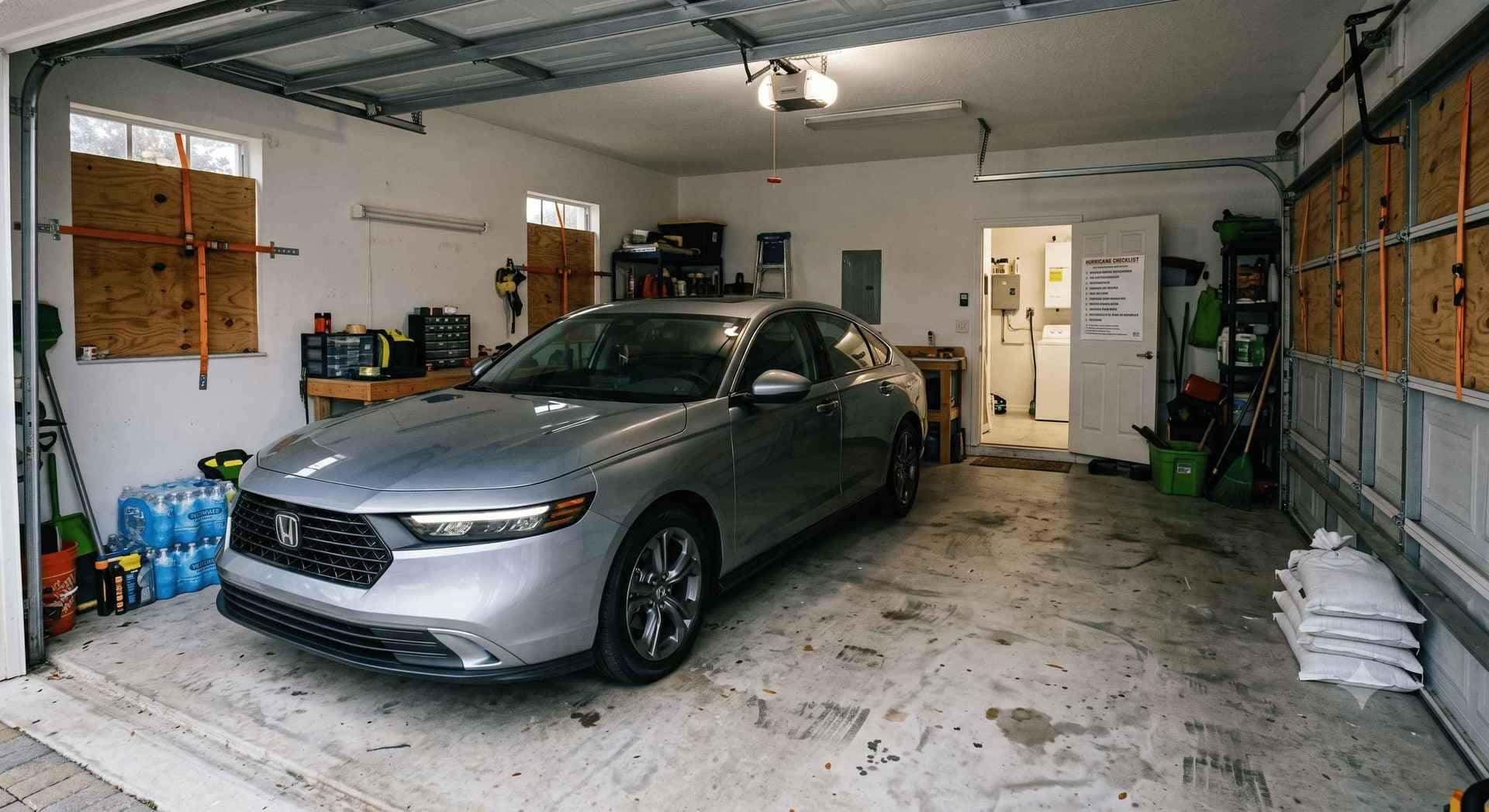
Table of Contents
- Pre-Season Honda Inspection: Battery, Tires, Wipers, Fluids, and Brakes
- Fuel, Packing, and Evacuation-Ready Planning for Honda Drivers
- Miami Storm Routes, Local Conditions, and After-the-Storm Vehicle Checks
- Safety Engineering Detail: Flood Damage Signs to Never Ignore
- Family and Lifestyle Fit: Packing a CR-V, Pilot, Odyssey, Passport, or Ridgeline for Storm Season
- Key Takeaways
- Honda Hurricane Prep Miami FAQs
Pre-Season Honda Inspection: Battery, Tires, Wipers, Fluids, and Brakes
Key Takeaway: A hurricane-season Honda inspection should focus on starting power, wet-road control, visibility, fluids, lighting, braking, and emergency readiness before storm demand rises.
Battery, Belts, Lights, and Starting Confidence
Battery health matters before hurricane season because a weak battery can turn a supply run, evacuation plan, or post-storm check into a stressful problem. Miami heat is tough on batteries, and many drivers do not notice the decline until the vehicle starts slowly or refuses to start. Our service team recommends a battery test before peak storm season, especially if your Honda battery is older, if the vehicle sits for long periods, or if you have noticed slow cranking.
A hurricane-season inspection should also include belts, lights, fluid levels, and charging-system basics. Headlights, brake lights, hazard lights, and turn signals matter when visibility drops during heavy rain or when traffic patterns change after a storm. Belts and fluids matter because the vehicle may idle longer, sit in heat, or carry extra cargo during evacuation or supply runs.
For a Doral commuter who depends on an Accord for work and family errands, we recommend checking the battery, lights, belts, and fluids before a storm watch is issued. A Honda that starts reliably and communicates clearly to other drivers is better prepared for traffic, rain, and unexpected route changes. Our technicians can review these items during a multi-point inspection and flag what should be handled before weather becomes urgent.
- If your Honda cranks slowly, schedule a battery test before storm season intensifies.
- If your headlights look dim or hazy, check lighting before heavy rain driving.
- If your vehicle is overdue for maintenance, schedule service before storm demand rises.
- If you plan to evacuate, confirm that fluids, belts, tires, and brakes are ready first.
| Inspection Item | What We Check | Why It Matters During Hurricane Season | Owner Warning Sign | Ideal Use Case |
|---|---|---|---|---|
| Battery | State of charge, terminals, starting strength | Supports evacuation, supply runs, and post-storm driving | Slow cranking or warning light | Daily commuters and family vehicles |
| Tires | Tread condition, pressure, visible damage | Wet-road grip matters in heavy rain | Uneven wear or low pressure warning | Drivers using US 1 or Palmetto routes |
| Brakes | Brake feel, pad condition, fluid concerns | Stop-and-go storm traffic needs predictable braking | Squeal, vibration, longer stopping distance | Kendall and Coral Gables families |
| Wipers | Blade condition, streaking, washer spray | Visibility can change quickly during rain bands | Chatter, streaks, torn rubber | All Miami-Dade Honda owners |
| Lights | Headlights, brake lights, hazards, signals | Helps other drivers see your vehicle | Dim output or warning message | Night and heavy-rain drivers |
| Fluids and belts | Fluid level, leaks, belt condition | Supports heat, idling, and longer routes | Leaks, noises, overheating concerns | Evacuation and long-distance drivers |
Based on Honda official website.
Tires, Tire Pressure, Brakes, and Wet-Road Control
Tires and brakes become more important when roads are wet, crowded, or covered with debris. We recommend checking tire pressure, tread depth, sidewall condition, and visible damage before hurricane season because evacuation traffic and post-storm road conditions can be unpredictable. Proper tire pressure also helps the vehicle carry passengers, emergency supplies, pet items, and cargo more confidently.
For a Kendall parent with a Pilot carrying kids, pets, chargers, water, and emergency bags, we recommend a tire and brake inspection before the first major storm threat of the season. Extra cargo can change how the vehicle feels, and heavy rain can lengthen stopping distance. Honda Sensing driver-assistive features can support awareness, but tires, brakes, visibility, and driver judgment remain essential.
Our technicians can inspect tread wear, brake condition, tire pressure, and visible suspension concerns during a pre-season visit. If the tires are worn or the brakes already feel soft, noisy, or uneven, we recommend handling the issue before a forecast forces a rushed decision.
Wipers, Washer Fluid, Cabin Filter, and Visibility
Visibility is one of the simplest storm-prep items to improve and one of the easiest to overlook. Wiper blades that streak on a dry week can become a real problem during wind-driven rain. Washer fluid, windshield condition, defogging performance, and cabin filter condition all affect how clearly you can see and how comfortable the cabin feels when humidity rises.
For a Coral Gables Odyssey driver who carries children, medications, chargers, and family supplies, we recommend checking wipers, washer fluid, cabin filter condition, and interior organization before storm watches begin. A minivan can carry a lot, but the driver still needs clear visibility, working climate control, and a cabin layout that keeps essential items easy to reach.
We can replace worn wipers, inspect cabin air filter condition, and review basic visibility items during service. These are not dramatic repairs, but they matter during sudden downpours, humid mornings, and long periods of slow storm traffic.
Fuel, Packing, and Evacuation-Ready Planning for Honda Drivers
Key Takeaway: A storm-ready Honda should have fuel, tire confidence, working visibility, organized supplies, charged devices, important documents, and a service plan before evacuation pressure begins.
Honda Hurricane Prep Checklist Table
The most useful hurricane checklist is practical, not complicated. We recommend organizing your Honda around three questions: can it start and drive safely, can it carry the people and supplies you need, and can you use it after the storm if roads are safe? That mindset applies whether you drive a compact Civic, a family CR-V, a three-row Pilot, an Odyssey, a Passport, or a Ridgeline.
| Prep Category | What to Check | Why It Matters | Owner Action | Service Action | Ideal Use Case |
|---|---|---|---|---|---|
| Fuel or charge planning | Fuel level, range estimate, charging access if applicable | Evacuation and supply runs may require extra range | Fill early and avoid waiting until landfall nears | Review vehicle health before travel | All storm-season drivers |
| Emergency kit | Water, food, first aid, flashlight, chargers, documents | Supplies should be ready before roads get crowded | Pack items in waterproof bins or bags | Check cargo accessories if needed | Families, pet owners, older relatives |
| Tires and brakes | Pressure, tread, brake feel, visible damage | Rain, debris, and traffic require control | Watch for tire warnings or brake noise | Perform tire and brake inspection | Evacuation or longer route drivers |
| Visibility | Wipers, washer fluid, lights, defogging | Storm bands can reduce visibility quickly | Replace streaking wipers before storms | Inspect wipers, lights, and cabin filter | Night, rain, and school pickup drivers |
| Cargo setup | Space for water, bags, pet items, chargers, medication | Loose cargo can become frustrating or unsafe | Load heavy items low and secure them | Recommend mats or cargo accessories | CR-V, Pilot, Odyssey, Passport, Ridgeline owners |
| Post-storm awareness | Flood exposure, warning lights, wet carpet, odors | Water intrusion can damage critical systems | Do not start if flood damage is suspected | Schedule inspection before driving | Drivers in flood-prone areas |
Based on Honda official website.
For Miami Honda owners, the strongest hurricane-prep plan combines early service, organized supplies, and a clear driving plan. We recommend filling the tank early, keeping emergency items in easy-to-carry containers, checking tires and wipers, and scheduling service before storm demand grows. A vehicle that is ready before the forecast becomes urgent gives your family more options.
Use-Case Recommendations for CR-V, Pilot, Odyssey, Passport, and Ridgeline Owners
Different Honda models support different storm-season routines. A CR-V may be the right size for a family of four and emergency bins. A Pilot or Odyssey may make more sense for a larger household, pets, older relatives, and supplies. A Passport or Ridgeline can support drivers who need more gear space for cleanup, work tools, or outdoor storage after the storm.
- If you drive a CR-V in Pinecrest and need space for water, bags, pet items, and chargers, we recommend a pre-season tire check and a simple cargo plan because compact SUV space works best when supplies are organized.
- If you drive a Pilot in Kendall with kids, pets, and multiple emergency bags, we recommend checking tires, brakes, wipers, and cargo layout because three-row packing can get crowded fast.
- If you drive an Odyssey in Coral Gables and carry children, medications, tablets, and chargers, we recommend organizing kid supplies early because sliding-door access helps when loading is repeated.
- If you drive a Ridgeline or Passport in Homestead and expect supply runs or outdoor cleanup, we recommend checking tires, lights, battery strength, and cargo accessories because post-storm roads can include debris and standing water.
We can help you prepare your Honda before hurricane-season demand rises. Our team can schedule a multi-point inspection, battery check, wiper replacement, tire inspection, brake inspection, cabin filter review, or genuine Honda parts support based on your vehicle and driving plan. You can use our online service scheduler, call us at 786-551-4133, or visit our South Miami service center before a storm threat becomes urgent. We work with Civic, Accord, CR-V, Pilot, Odyssey, Passport, Ridgeline, and HR-V owners from Miami, Homestead, Kendall, Doral, Hialeah, Pinecrest, Coral Gables, and nearby communities. We will help you understand what needs attention now and what can wait, so your storm plan is based on your vehicle’s actual condition.
Miami Storm Routes, Local Conditions, and After-the-Storm Vehicle Checks
Key Takeaway: Miami hurricane prep should account for US 1 traffic, Palmetto Expressway congestion, localized flooding, debris, post-storm supply runs, and community-specific routes.
South Miami, Coral Gables, Pinecrest, Kendall, and Homestead Storm-Route Considerations
Miami-Dade storm driving is shaped by more than distance. US 1 traffic can slow quickly, Palmetto Expressway routes can become crowded, neighborhood streets can hold water, and post-storm debris can change how familiar roads feel. We recommend preparing your Honda for slow traffic, heavy rain, visibility changes, and the possibility that you may need to carry more cargo than usual.
For South Miami and Coral Gables drivers, we recommend checking wipers, lights, tires, and battery health before storm watches because short local trips can become slow and stressful during heavy rain. For Homestead drivers who may travel longer distances or carry supplies after the storm, we recommend tire, brake, light, and battery checks before the season peaks. Our dealership location on South Dixie Highway gives local drivers a practical service stop before severe weather forces rushed decisions.
| Local Condition | Vehicle Concern | Honda Driver Scenario | Prep Recommendation | Best For |
|---|---|---|---|---|
| US 1 congestion | Idling, heat, battery load, visibility | South Miami commuter in slow rain traffic | Battery, lights, wipers, fluids | Civic, Accord, HR-V drivers |
| Kendall family routes | Kids, pets, supplies, stop-and-go driving | Pilot carrying emergency bins and family bags | Tires, brakes, cargo setup | Pilot and Odyssey families |
| Pinecrest tree-lined roads | Debris, wet leaves, blocked routes | CR-V driver planning alternate roads | Tire tread, lights, emergency kit | CR-V and Passport owners |
| Coral Gables parking and garages | Flood awareness and visibility | Odyssey parked during heavy rain | Know flood signs before restarting | Families and condo drivers |
| Homestead supply runs | Longer distance, cargo, debris | Ridgeline or Passport carrying cleanup gear | Tires, battery, lights, cargo accessories | Outdoor and property owners |
| Post-storm local flooding | Water intrusion risk | Any Honda exposed to standing water | Do not start if flood damage is suspected | All Honda owners |
We are ready to help you prep before a storm and inspect after severe weather passes. Our service center is located at 16165 S Dixie Hwy, Miami, FL 33157, and we serve South Miami, Coral Gables, Pinecrest, Kendall, Doral, Hialeah, Homestead, and nearby communities. You can review our Honda service specials, ask about genuine Honda parts, or call us at 786-551-4133 before hurricane-season demand rises. We can help with wipers, battery checks, tire inspections, brake concerns, cabin filters, multi-point inspections, and post-storm service questions. Our team understands how South Florida weather changes vehicle needs, and we will keep the visit focused on the items that matter most for your Honda and your family routine.
Safety Engineering Detail: Flood Damage Signs to Never Ignore
Key Takeaway: If your Honda may have been exposed to flood water, do not start it until a qualified inspection confirms that critical systems are safe.
Flood exposure is one of the most serious after-storm vehicle concerns because water can affect electrical systems, fluids, brakes, interior materials, and engine components. If you see a water line, wet carpet, warning lights, musty odor, contaminated fluids, or unusual starter behavior, we recommend stopping and arranging an inspection instead of trying to drive. Starting a vehicle after possible water intrusion can make damage worse.
For a South Miami driver who returns to a parked Honda after street flooding, our advice is simple: do not start the vehicle if water may have reached the engine bay, cabin floor, electrical areas, or air intake. Take photos, contact your insurance provider when needed, and schedule an inspection. Our service team can check visible flood indicators and advise the next step based on the vehicle’s condition.
| Flood Warning Sign | What It May Indicate | Safe Next Step |
|---|---|---|
| Visible water line | Vehicle may have sat in standing water | Do not start before inspection |
| Wet carpet or musty odor | Interior water intrusion | Document condition and schedule inspection |
| Warning lights after storm | Electrical or sensor concern | Have the system checked before continued driving |
| Milky or contaminated fluid | Possible water contamination | Do not drive until inspected |
| Strange starter behavior | Possible electrical or engine concern | Stop and request professional evaluation |
| Brake feel changes | Water exposure or debris concern | Schedule brake and safety inspection |
Family and Lifestyle Fit: Packing a CR-V, Pilot, Odyssey, Passport, or Ridgeline for Storm Season
Key Takeaway: The right Honda storm-packing plan depends on your passengers, supplies, pets, medical needs, tools, and how your model’s cargo space is used.
Packing for storm season should fit the vehicle and the people using it. A CR-V may work well for a compact family kit. A Pilot or Odyssey can carry more people, pet supplies, medications, chargers, and sleeping items. A Passport or Ridgeline can support outdoor gear, work tools, cleanup items, or property supplies after the storm.
| Honda Model | Storm-Season Strength | Packing Focus | Best Use Case |
|---|---|---|---|
| CR-V | Compact SUV cargo flexibility | Water, pet items, emergency bins, chargers | Pinecrest family or daily commuter |
| Pilot | Three-row family space | Kids, pets, larger bags, family supplies | Kendall household planning evacuation |
| Odyssey | Sliding-door access and family cabin space | Medications, kid items, chargers, comfort supplies | Coral Gables family with younger children |
| Passport | Rugged SUV cargo area | Outdoor bins, rain gear, cleanup items | Homestead weekend or property owner |
| Ridgeline | Truck utility | Tools, tarps, sealed bins, cleanup supplies | Post-storm supply and property support |
| Ideal Use Case | Choose by routine | Pack by passengers first, cargo second | Families, commuters, pet owners, and property owners |
- If you have young children, pack chargers, medications, snacks, comfort items, and extra clothes where they are easy to reach.
- If you travel with pets, keep food, water, leash, waste bags, and documents in a dedicated bag.
- If you help older relatives, keep medical information, mobility items, and contact lists protected from water.
- If you expect cleanup work, keep tools and wet items away from cabin electronics and soft materials.
- Use waterproof containers for important documents.
- Load heavy items low and secure them before driving.
- Keep phone chargers and a flashlight within reach.
Key Takeaways
- Honda hurricane prep should start before a named storm is near Miami.
- Battery, tires, brakes, lights, wipers, fluids, and fuel are the core vehicle checks.
- CR-V, Pilot, Odyssey, Passport, and Ridgeline owners should pack by passengers, pets, and cargo needs.
- A Honda exposed to possible flood water should not be started until inspected.
- We recommend scheduling storm-season service early to avoid last-minute pressure.
Honda Hurricane Prep Miami FAQs
How should I prep my Honda before hurricane season in Miami?
We recommend prepping your Honda before hurricane season by checking the battery, tires, brakes, fluids, belts, lights, wipers, washer fluid, fuel level, emergency kit, and cargo setup. For Miami drivers, those checks matter because storm traffic, rain, heat, debris, and possible evacuation routes can put extra strain on the vehicle. A pre-season service visit helps us confirm what is ready and what needs attention.
Should I fill my Honda’s gas tank before a hurricane?
We recommend filling your Honda’s gas tank early when a storm threat becomes realistic, not waiting until the last moment. A full tank gives you more flexibility for evacuation, supply runs, traffic delays, and post-storm movement if roads are safe. If you drive a hybrid Honda, fuel planning still matters because gasoline availability can become limited before and after severe weather.
What should I check after driving through flood water?
If your Honda may have been exposed to flood water, we recommend checking for a water line, wet carpet, musty odor, warning lights, brake feel changes, unusual noises, and fluid contamination. Do not start the vehicle if water may have entered critical systems. Document what you see, contact insurance when appropriate, and schedule an inspection before driving farther.
Can Honda of South Miami inspect my vehicle before a storm?
We can inspect your Honda before hurricane season with service items such as battery testing, tire checks, wiper replacement, brake inspection, fluid review, cabin filter inspection, and multi-point maintenance guidance. We recommend scheduling early because storm-season demand can rise quickly once forecasts become active. Call us at 786-551-4133 or use our online service scheduler.
Related Articles
Keep reading more Honda service guides, hybrid shopping tips, and family vehicle comparisons from Honda of South Miami.
Service Guide
Schedule Honda Service in South Miami
Book Honda maintenance, inspections, and service visits with our South Miami team before storm season or your next road trip.
Parts Support
Genuine Honda Parts for Miami Drivers
See how genuine Honda parts support long-term fit, quality, and confidence when your Honda needs replacement components.
SUV Guide
View New Honda SUVs for Miami Families
Compare Honda SUVs for family cargo, weekend driving, school routines, and South Florida weather.
0 comment(s) so far on Hurricane Season in Miami: How to Prep Your Honda